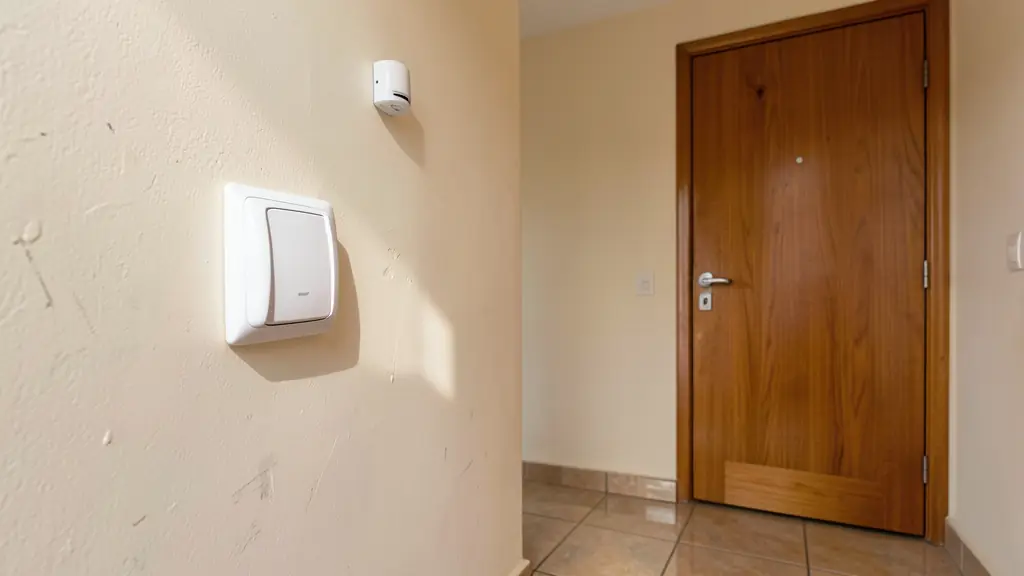
An alarm system is the part of your security that tells you, and your response company, that someone has got in. A good one is designed around how you live: which doors you use, whether you have pets and how often the power goes off. Send one request with your property and what you have now, and independent installers visit and quote you directly. It is free and there is no obligation. For the vehicle that comes out, see armed response.
The parts of a system
A typical installation has these parts:
- Control panel: the brain, kept in a hidden, locked place, with a battery and a mains transformer.
- Keypad: arms and disarms the system, usually at the front door and the bedroom passage.
- Motion sensors (PIRs): detect heat and movement in rooms. Pet-friendly models ignore animals up to a set weight, often about 20 to 25 kg.
- Magnetic contacts: sit on doors and windows and trip when they open.
- Siren and strobe: an outside siren that deters and alerts neighbours.
- Panic buttons: fixed in the bedroom or carried on a remote.
Wired or wireless
Wired sensors are reliable and cheap per point, but cables must be run through ceilings and walls, which is easiest during building or renovation. Wireless sensors are fitted quickly with no mess and suit rentals, flats and finished homes. Their weak points are batteries, which need replacing every few years, and signal range through thick walls. Many homes use a mix, with wired sensors where the ceiling is open and wireless where it is not.
Zones and partitions let you arm the downstairs of a house while you sleep upstairs, or arm the warehouse separately from the office. Plan the zones with the installer before the sensors go in.
Communicators, battery and load shedding
An alarm that only sounds a siren relies on neighbours. To reach a control room, the panel needs a communicator: GSM (cell network) or IP (internet), and ideally both, so one backs up the other. Phone lines are rarely used now. The panel's backup battery should keep the system and communicator running for several hours, but it needs a test every year and replacing every two to three years. Long load shedding drains a weak battery, which is the most common reason a system fails at night. Ask for a battery size that matches your area's outage times.
Linking, servicing and false alarms
A system linked to a control room costs a monthly fee, and the response company usually charges for call-outs triggered by false alarms. Keep false alarms down by arming only after pets are secured, trimming plants near outdoor sensors and having the installer service the system yearly. Combine the alarm with outdoor beams to detect people before they reach the house. Ask whether the panel can be taken over by another company if you switch, since some are locked to the original installer.
What to include in your request
- Type of property and number of rooms or floors
- Doors and windows to cover
- Pets, their size and where they sleep
- Existing alarm to upgrade or take over
- Whether to link to armed response
Alarm Systems for different sites
- Homeowners and families: a panel, pet-friendly sensors in the passages and contacts on the main doors
- Estates, complexes and body corporates: a house alarm linked to the estate control room and to the response company
- Offices, shops and retail centres: sensors in the shop and stockroom, a panic button and a code per staff member
- Factories, warehouses and yards: multi-zone alarms on offices, stores and roller doors, armed separately by area
- Building sites and contractors: alarms on site containers and offices, with sirens and a GSM link
- Farms and smallholdings: alarms on the farmhouse and sheds with a GSM communicator where no phone line exists
- Events, venues, hotels and lodges: sensors in public areas and kitchens, with zones for guest rooms and back-of-house
- Schools, clinics and churches: zoned alarms on classrooms and offices, armed by the caretaker after hours
Frequently asked questions
How much does a home alarm system cost?
Will my dog set off the alarm?
Can I fit a wireless alarm myself?
What happens to my alarm during load shedding?
Alarm Systems by province and city
- Johannesburg
- Pretoria
- Centurion
- Midrand
- Sandton
- Randburg
- Roodepoort
- Krugersdorp
- Randfontein
- Germiston
- Boksburg
- Benoni
- Kempton Park
- Alberton
- Vanderbijlpark
- Vereeniging
- Durban
- Pinetown
- Pietermaritzburg
- Richards Bay
- Newcastle
- Ladysmith
- Gqeberha (Port Elizabeth)
- East London
- Kariega (Uitenhage)
- Mthatha
- Cape Town
- Bellville
- Paarl
- Stellenbosch
- George
- Worcester
- eMalahleni (Witbank)
- Middelburg
- Secunda
- Mbombela (Nelspruit)
- Rustenburg
- Brits
- Klerksdorp
- Potchefstroom
- Mahikeng
- Polokwane
- Tzaneen
- Kimberley
- Upington
- Bloemfontein
- Welkom
- Sasolburg