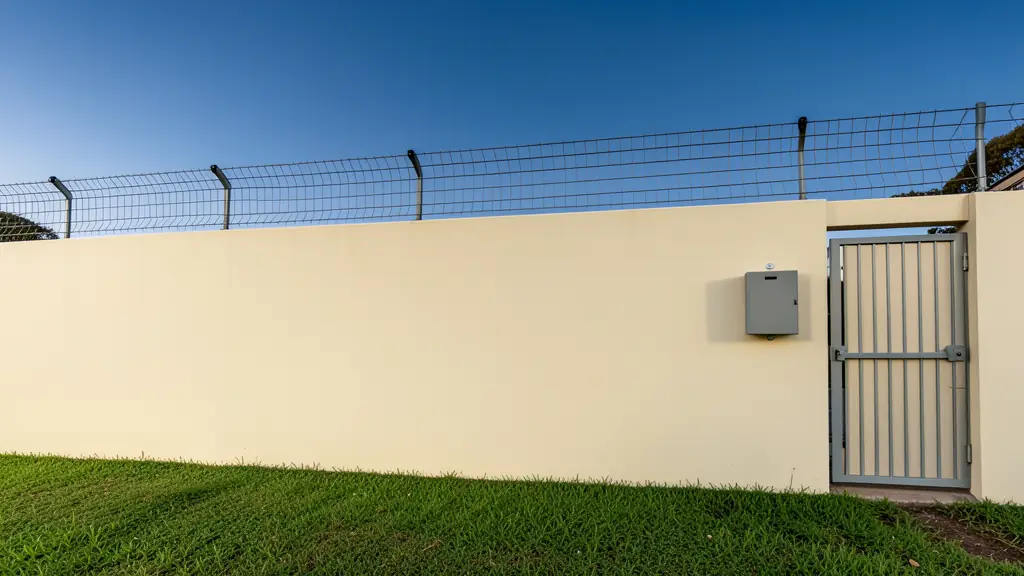
An electric fence does not stop an intruder by force. It gives a short, sharp shock and sets off an alarm, which is why it works best on top of a wall or along a clear boundary where someone can respond. Installers quote by the metre, but the real price depends on the energiser, the number of strands, the corners and gates, and whether the fence is zoned and linked to your alarm. Send one request with your boundary length and the installers that work in your area quote you directly, free of charge.
How an electric fence is built
A pulse energiser sends a high-voltage, very short pulse down the strands. Its strength is rated in joules: a small joule rating suits a suburban wall, while a long farm or industrial boundary needs a bigger unit. The strands run through insulators on brackets, are pulled tight with tensioners, and the circuit is completed through earth spikes driven into the ground. A wall-top fence usually has four to eight strands on brackets; a freestanding fence uses posts, with strands spaced closer together near the ground so small animals and children cannot slip between them.
Good installers divide the fence into zones, so a cut or touched strand tells the control room exactly which stretch to check. Zones are wired to your alarm system, which can then call out armed response.
The electric fence certificate
When an electric fence is installed, altered, or the property is sold, the work usually needs an electric fence system certificate (EFC) issued by a registered installer, in line with the Electrical Machinery Regulations and SANS 10222-3. Ask your installer whether one is required for your job and make sure you get it in writing. Buyers, bonds and insurers often ask for it, so keep it with your title deed papers.
The same standard asks for warning signs on the fence at regular intervals, and for the fence to be built so that it cannot be touched from a neighbour's side without their knowledge. If your fence faces a public pavement or a neighbour, tell the installer at the survey.
What affects the price
As a rough 2026 guide, installed electric fencing costs R200 to R550 per metre, plus about R2,500 to R8,000 for the energiser and R800 to R1,500 for the certificate. Brackets and strand count, the energiser size, extra corners, gates that must stay live, and a battery backup for load shedding all move the figure. A wall-top fence on an existing wall is usually cheaper than a freestanding fence with posts and footings. Ask whether the quote includes the certificate, the alarm link, the signs and a warranty, because cheaper offers often leave these out. Our price guide shows how this compares with other perimeter options.
Keeping it working
Most faults come from vegetation touching the strands, broken or sagging wires, cracked insulators and poor earthing in dry ground. Cut back creepers and branches every few months, and have the fence tested by your installer once a year. On the Highveld, lightning can damage energisers and alarm panels, so ask about surge protection. A fence that goes quiet because of an ignored fault is worse than none, since everyone believes it is working.
What to include in your request
- Boundary length in metres, or the plot size
- Wall-top or freestanding fence
- Number of corners and gates to include
- Whether you need a certificate for a sale
- If it must link to an alarm and have battery backup
Electric Fencing for different sites
- Homeowners and families: a wall-top fence on a suburban boundary, zoned and linked to the house alarm
- Estates, complexes and body corporates: a perimeter fence in zones with alarm points that report to the estate control room
- Offices, shops and retail centres: a fence on the rear and side walls to protect stock yards and parking
- Factories, warehouses and yards: a long freestanding fence with several zones, cameras and floodlights
- Building sites and contractors: a temporary fence around a stores yard or compound with a portable energiser
- Farms and smallholdings: a perimeter or homestead fence with a larger energiser and good earthing
- Events, venues, hotels and lodges: a discreet wall-top fence at lodges and guesthouses with warning signs facing out
- Schools, clinics and churches: a wall-top fence on school or clinic boundaries, linked to an alarm after hours
Frequently asked questions
Is an electric fence legal in South Africa?
Do I need a certificate when I sell my house?
Will it work during load shedding?
Can I repair a broken fence myself?
Electric Fencing by province and city
- Johannesburg
- Pretoria
- Centurion
- Midrand
- Sandton
- Randburg
- Roodepoort
- Krugersdorp
- Randfontein
- Germiston
- Boksburg
- Benoni
- Kempton Park
- Alberton
- Vanderbijlpark
- Vereeniging
- Durban
- Pinetown
- Pietermaritzburg
- Richards Bay
- Newcastle
- Ladysmith
- Gqeberha (Port Elizabeth)
- East London
- Kariega (Uitenhage)
- Mthatha
- Cape Town
- Bellville
- Paarl
- Stellenbosch
- George
- Worcester
- eMalahleni (Witbank)
- Middelburg
- Secunda
- Mbombela (Nelspruit)
- Rustenburg
- Brits
- Klerksdorp
- Potchefstroom
- Mahikeng
- Polokwane
- Tzaneen
- Kimberley
- Upington
- Bloemfontein
- Welkom
- Sasolburg